
Trace Former Irwin County Owners
Begin with the newest deed tied to the land. That is your anchor. From there, each older transfer becomes a single row, with the dates serving as fields to record rather than a sample history of one real parcel.
| Transfer date | Grantor to grantee | Deed type | Book/page |
|---|---|---|---|
| Newest located recording | Seller or prior holder to current grantee | Copy exact index term | Save exact citation |
| Prior acquisition | Earlier grantor to that seller | Include estate, gift, or quitclaim | Save exact citation |
| Earlier linked transfer | Repeat only after land match | Record corrective or forced-sale form | Save exact citation |
Keep the table provisional. Match every legal description first. A shared surname, street, or acreage proves little once parcels have split, merged, or crossed an old county line. A known citation can be tested through the GSCCCA book-and-page search.
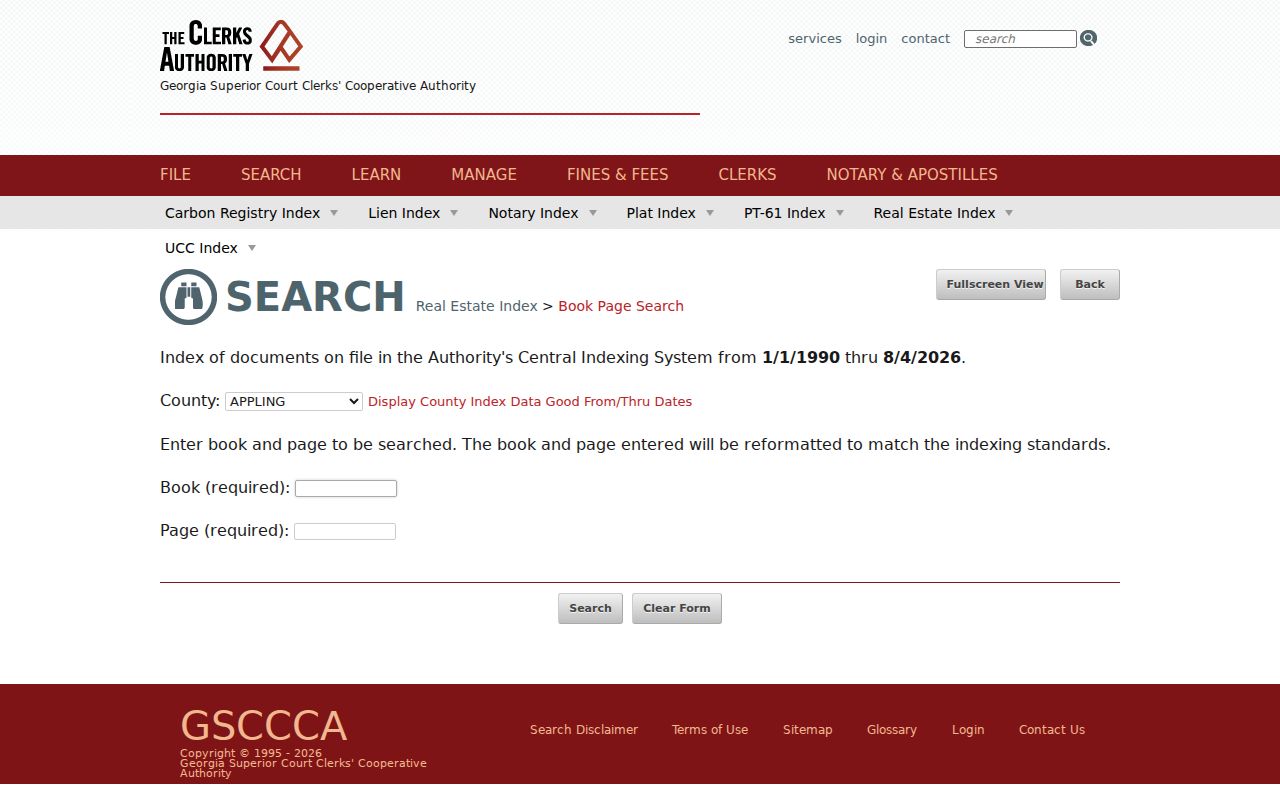
Book and page beats a name search. It is the more precise tool whenever an older instrument hands you the reference.
Search Irwin's Former Owner Grantor Index
Start at the GSCCCA name form, which offers filters for party role, instrument type, county, name, and date range. Set the role to grantee and search the current owner's acquisition deed first. The seller listed as grantor then becomes your next grantee target. That single step starts the chain.
Expect some friction in Irwin County names. Middle initials come and go. Married surnames, estate wording, trusts, and LLC punctuation all hide matches. Run the name across every instrument type before narrowing anything, because a warranty-deed-only search can skip the transfer that actually mattered, whether it passed through an estate, a gift, a foreclosure, a sheriff or tax sale, a trustee, a quitclaim, or a correction.
The GSCCCA name-search form displays the party, instrument, county, date, and display controls a visitor needs.
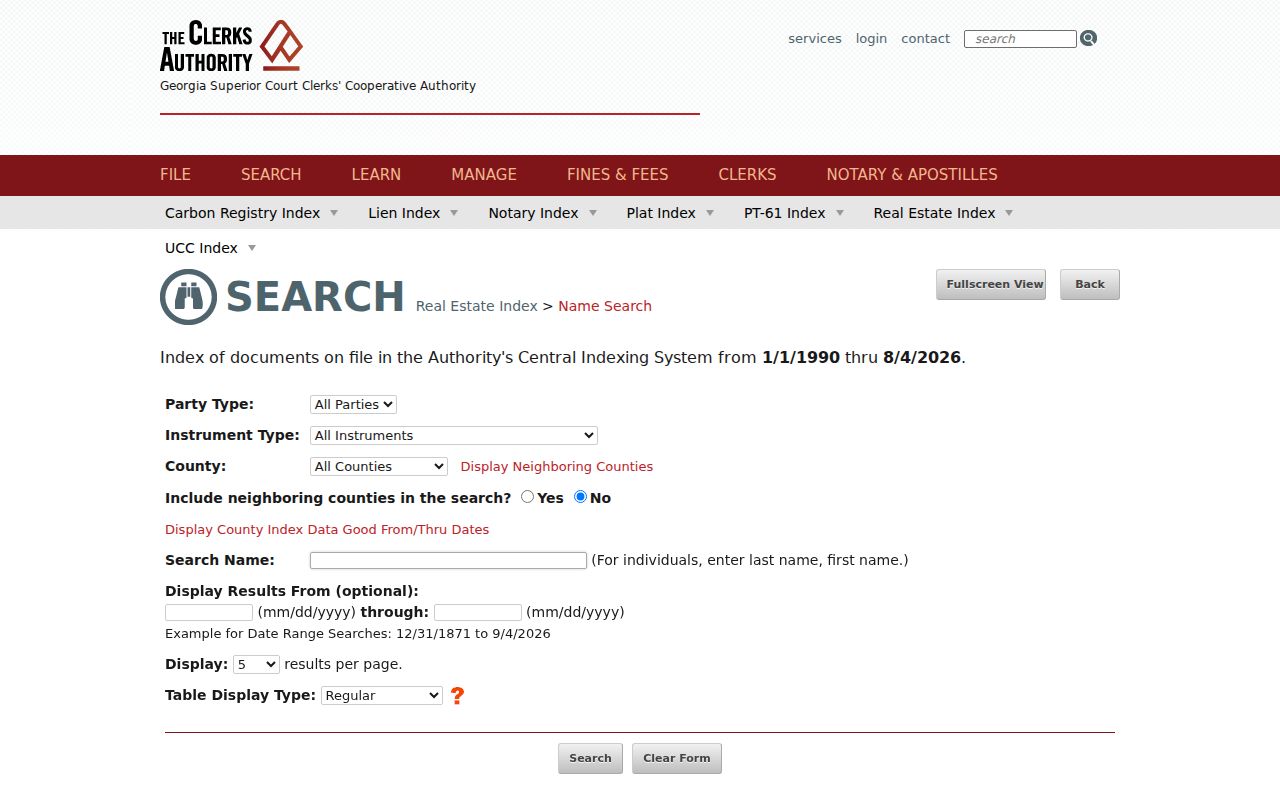
Those controls make each former-owner search scope reproducible even without a verified result image.
Reconstruct Irwin Previous Owners' Deed Chain
Read the transfers in reverse order. Keep an evidence sheet. It keeps names attached to the right parcel as the chain grows. The sheet should separate execution from recording. It should also record whether the image was viewed, whether the legal description matched, and whether the transfer was direct or rested on a probate or court record. Never squeeze two instruments into one sentence. A corrective deed, release, or assignment can quietly change the meaning of an earlier index row without creating a new sale.
- Locate the newest grantee deed and log its parties, dates, type, and book/page.
- Compare its description with the current parcel and any plat reference.
- Search that deed's grantor as a grantee to find the prior acquisition.
- Repeat until the index, images, or description link ends, then state the gap.
- Grantor
- The party conveying an interest.
- Grantee
- The party receiving an interest.
- Chain of title
- The linked sequence of instruments affecting the same land.
- Reverse index
- A grantor-based route used to step from a later owner toward earlier owners.
- Quitclaim deed
- A conveyance of whatever interest the grantor has, without the covenants of a warranty deed.
Bridge Irwin Prior Owner Lots to Parcels
Early Irwin land ran on districts and lots. The Georgia Archives preserves a concrete 1820 example: William Mills's orphans drew lot 8 in district 14, and heirs sold it in 1830. That single clue shows how an old grant, an heir transaction, a deed, and a tax digest can line up.
Don't force an old lot into a parcel ID. Look for later instruments instead. They may repeat the district, lot, acreage, adjoining owners, or plat. A continuous description match is the bridge. The GSCCCA plat index adds map context.
It works best with a verified plat name or citation. The GSCCCA property form shows subdivision and date controls, subject to county participation.
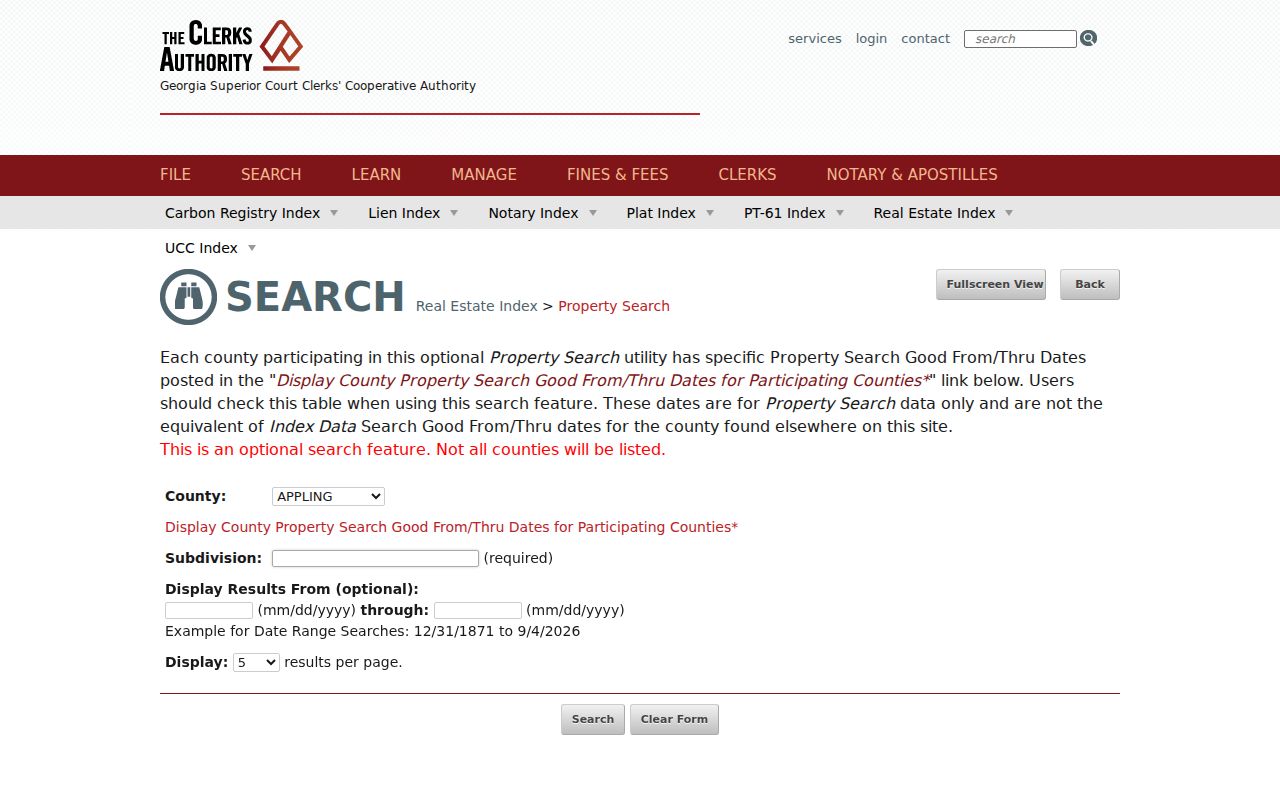
Subdivision results depend on county participation. Until the form returns a matching tract, it stays an option rather than proof for a named piece of land.
Follow Former Irwin Owners Through Estates
Chains break at death. Probate records can establish an executor's, administrator's, or heir's authority. The recorded estate deed or court order then carries the land evidence forward. Search the decedent's name, "estate of," representative names, and estate-tied deed types.
Keep both sources. A probate file explains authority but never replaces the recorded transfer, and a newspaper administrator-sale notice is a lead rather than proof that the deed was recorded.
Irwin County Probate Court, at 301 S. Irwin Avenue, Suite 101, Ocilla, can pull a bounded estate file by decedent, representative, date range, and case detail. Older probate material may sit at Georgia Archives or FamilySearch instead. Access rules vary by record. So expect no unrestricted copies.
Check Former Irwin Owners Across Old Jurisdictions
Irwin County was created in 1818. It shrank as Lowndes, Thomas, Worth, Coffee, Berrien, Wilcox, Tift, Turner, and Ben Hill counties formed or expanded. Older deeds may sit outside modern Irwin. Old searches may need a historical jurisdiction. Record the instrument date, county named, district and lot, and adjoining owners first. Then extend the search. Use the neighboring-county checkbox in GSCCCA only when the chain supplies a reason, since a name hit in an adjacent county proves nothing about the Irwin parcel.
Use Archives for Former Irwin Owners
GSCCCA's all-county deed indexing reaches back to at least 1999, and older records keep arriving. A banner on the system points to a wider window starting in 1990. Those statements still leave Irwin County's true oldest online deed and image dates open. For deeper previous owners, ask the Clerk about deed books and indexes. Georgia Archives and FamilySearch offer further leads. Irwin tax digests from 1830 through 1832 can name owners, districts, acreage, and adjoining landholders. Historic newspapers add tax, sheriff, probate, and land-sale notices. Every clue still needs checking against the recorded instrument itself.
Georgia Archives also lists county tax holdings beginning around 1872. Earlier material sits on microfilm. The exact Irwin volumes are not yet confirmed. One catalog lead covers deed books from 1801 through 1901. It also covers indexes from 1799 through 1920, but that link is a starting point. Treat it as a lead rather than promised image coverage for your property search.
Coverage limit. Irwin's exact online cutoff is not verified. Older owners may require deed books, microfilm, tax digests, archives, and historical jurisdictions.
Account for Irwin Encumbrances
Ownership history is more than conveyance deeds. Security deeds, releases, assignments, liens, and easements all leave their mark. Rights-of-way, boundary agreements, restrictive covenants, and correction deeds do too. Any of these can explain a chain that seems to jump. They can also explain a legal description that suddenly changes.
Log each instrument separately. Note whether a lien or security deed was ever released or cancelled. Never let an unresolved index hit stand as a present claim. Need one certified copy? Use the Clerk's route described on the Irwin County deed records page.
Use Irwin Newspaper Leads
The Georgia Digital Library hosts an Ocilla Dispatch issue from May 18, 1900. It includes page images and OCR. Newspapers like it surface sheriff's sales, tax sales, and administrator sales. They also carry land notices, probate actions, and road or bridge projects. Search name variants, district and lot terms, acreage, and nearby owners. OCR stumbles on old type. Inspect the page image before trusting any name or figure.
A notice is not a conveyance. Extract the parties, publication date, legal description, and any stated book/page. Then hunt the resulting deed through GSCCCA or the Clerk. For a tax or sheriff sale, also find the sale authority and the sale status. Gather redemption facts and any later recorded instrument. For an estate sale, locate the probate authority and the estate deed. This notice-to-instrument method restores context to a broken chain without pretending the newspaper transferred title.
Earlier tax digests work much the same way. They may pin a name, district, acreage, or adjoining owner to a given year. Yet they remain indirect evidence of the deed chain. Label every tax, archive, or newspaper clue as indirect. Do so until a continuous description ties it to the modern parcel. That discipline matters in Irwin County. Early district-and-lot geography and later boundary reductions can push a property search beyond today's map.
Bound an Irwin Owner History
A former-owner chain ends at the oldest accessible, matched instrument. That is not necessarily the first owner. State your online cutoff, missing images, description conflicts, archive leads, and the last confirmed book/page. Irwin County has no documented courthouse fire. Records loss should never explain a gap. So the deed records gap needs another cause.
Lawful use. Former-owner research supports house history, estate work, and property diligence. Never use historical or current names to track, harass, or harm anyone.
A bounded result is honest and useful. The chain is reconstructed through the latest matched instruments to a given date, with earlier links left unverified. That phrasing keeps a researched trail distinct from a title opinion.
Close with a source list for every prior owner. Include the index URL, search date, and party role. Add the instrument type, book/page, image status, and description match. Label indirect archive clues separately. That structure lets a later researcher resume at the exact break. It avoids repeating the whole search or overstating the findings.